

We’re thrilled to share the exciting news that CYSO alum Megan Torti ’16 has won the Principal Flute Chair position with the North Carolina Symphony! Since her time as Principal Flute in our Symphony Orchestra, Megan has graced many prestigious orchestras across the country. This month, we had the privilege of catching up with her to discuss her journey, including the rigorous audition process, the challenges and rewards of performing at a professional level, and her invaluable advice for current CYSO students.
What have you been up to since you’ve left CYSO?

After graduating high school, I got my undergraduate degree at Rice University, the Shepherd School of Music, studying with Leone Busye, who recently retired! After that, I took a year off of school due to the pandemic and then moved to New York to start my master’s degree at the Manhattan School of Music studying with Robert Langevin. I’m very grateful to have been a regular substitute with the New York Philharmonic for a few years, and to have had the opportunity to perform with orchestras across the country including the Detroit Symphony, Baltimore Symphony, Houston Symphony, Tulsa Symphony, and the Jacksonville Symphony, among others. Now I’ll be moving to North Carolina in about a month to start as principal flutist of the North Carolina Symphony! I’m very excited about this new chapter of my life as it’s always been my dream to play in a professional orchestra full-time.
What would you say is the biggest change between high school level playing and professional level playing?
I would say that the biggest change between high school and professional-level musicians is self-sufficiency. Once I started performing regularly with professional ensembles, I had this big mental shift where I realized that I was the only one truly responsible for my growth as a musician. I couldn’t rely only on the feedback of my teachers for the rest of my life. I also had to find ways to stay intrinsically motivated to achieve my goals. So I started to prioritize discovering my voice as a flutist and figuring out how to bridge the gap between what I wanted to sound like and how I actually sounded. Learning to be my own teacher is the best gift any of my teachers could have given me.
Do you think the conservatory or university you go to affects you a lot later on in your career?
Yes and no. I think when choosing a school to study music, the teacher you study with should be your biggest priority. That relationship is hands down the most important connection you will make in school, so choose wisely. Going to a school that has lots of performance opportunities and helps connect you with active professionals in the field is always going to help later on in your career as well. Ultimately, no matter what school you go to there will always be pros and cons, so pick the best place for you — and know that if you have the internal drive to succeed, nothing can stop you from doing so!
What takeaways from CYSO have you kept with you throughout your professional career?
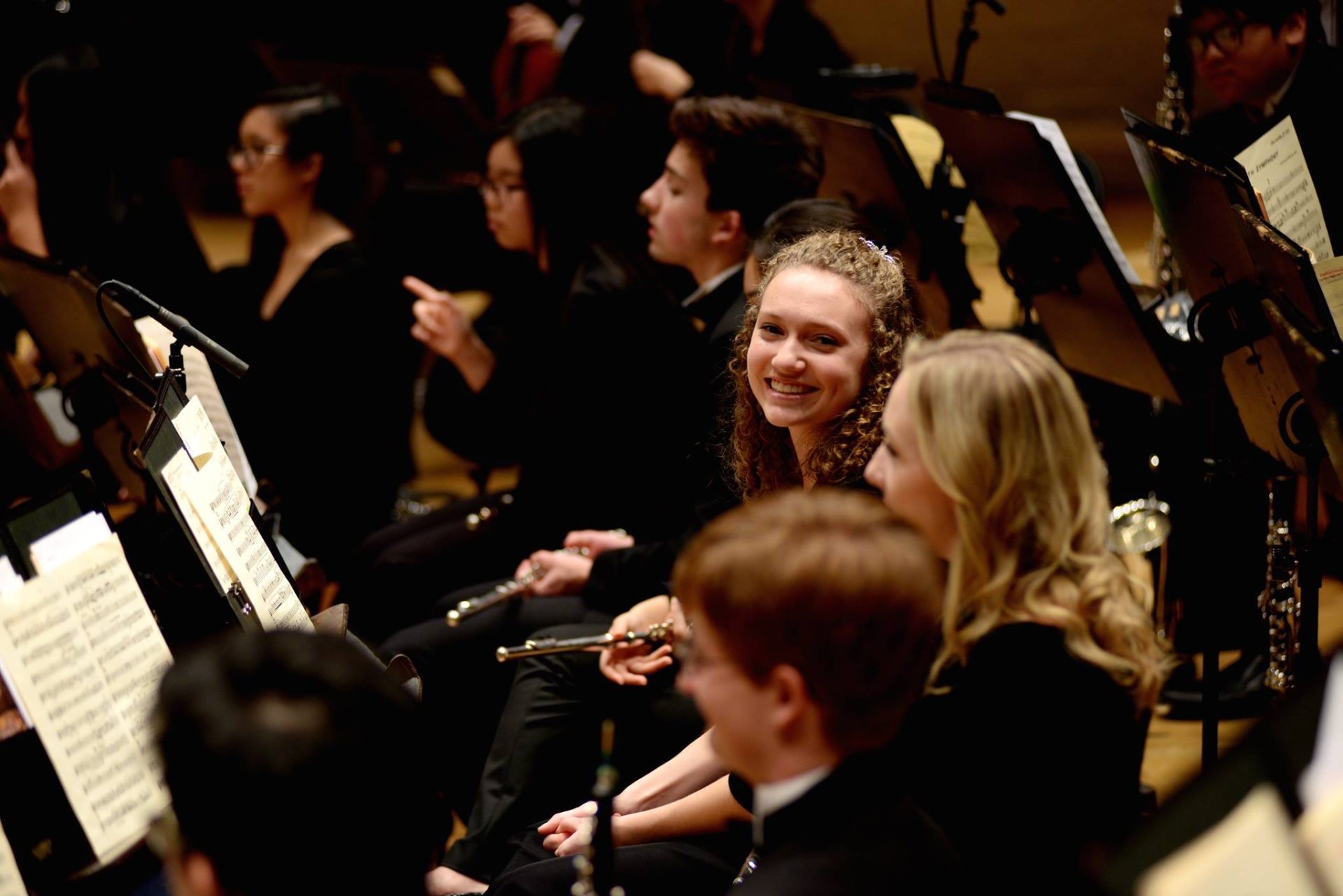
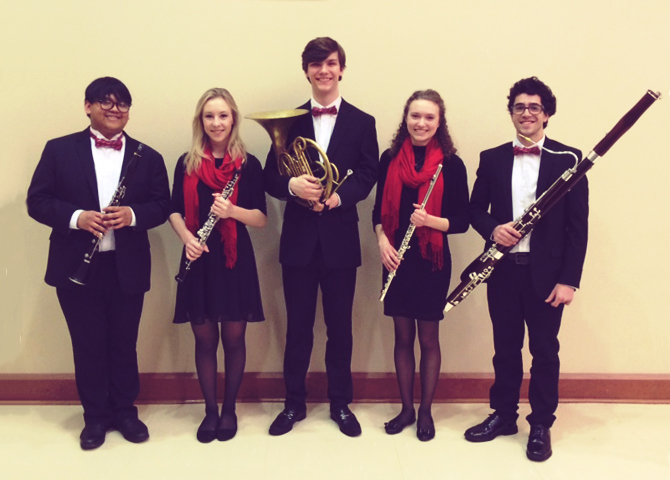
CYSO was a huge game-changer for me. I had always loved playing the flute, but once I had my first experience playing with a symphony orchestra and with my first woodwind quintet, I was absolutely hooked. I met so many wonderful people while in CYSO, (I am still friends with many of them today), and that made me view orchestral playing as a community experience. It’s a connection with the musicians onstage, and with the audience members. CYSO taught me to love that collaborative aspect of music, and that’s something that I will never forget.
What are your plans or goals for your professional career?
My dream has always been to play principal flute professionally with an orchestra so that dream is coming to fruition this fall when I start with the North Carolina Symphony! In addition to being an orchestral musician, I would also love to teach flute at a university at some point.
What has this recent audition experience with the North Carolina Symphony been like?
My audition experience with North Carolina was a whirlwind, stressful experience, but one that I am very proud of nonetheless! I had three days of audition rounds playing lots of challenging repertoire and of course, managing the always-present audition day nerves. I’ve taken so many auditions at this point that once I got to the final round in North Carolina, I simply decided to let go of any attachment to the outcome and just play in a way that felt true to myself. That mindset really helped me take some of the pressure off of myself and helped me perform well. I was onstage for about 30 minutes for that final round and I enjoyed it. I focused on the character of each individual excerpt and really got into the “zone”. It was an amazing feeling.
How would you recommend students diversify their repertoire?
I think that in order to be a well-rounded performer, it’s necessary to learn how to perform music of different styles and from different time periods. Understanding the difference between playing Bach and Mozart, for example, is very important. I think a great way to diversify your repertoire is to work with a trusted teacher on pieces that interest you from the baroque, classical, romantic, and contemporary periods. Playing in a chamber group is also a great way to improve your knowledge of musical style (especially if you play a string instrument).
What’s your favorite style of music to play?
I love playing pieces from the Romantic era in the orchestra, such as Brahms and Beethoven’s symphonies. They feel very much like large-scale chamber music pieces to me and I find them very rewarding to perform and listen to.
Do you have any advice for this year’s graduating seniors?
You’re about to embark on a huge journey of self-growth. No matter what your path ahead looks like, I hope you enjoy the new transition and take the time to learn more about yourself along the way. You are all so fortunate to have participated in CYSO, and I hope that you always keep music in your life in whatever way feels genuine to you.
