

A Noteworthy Masterclass
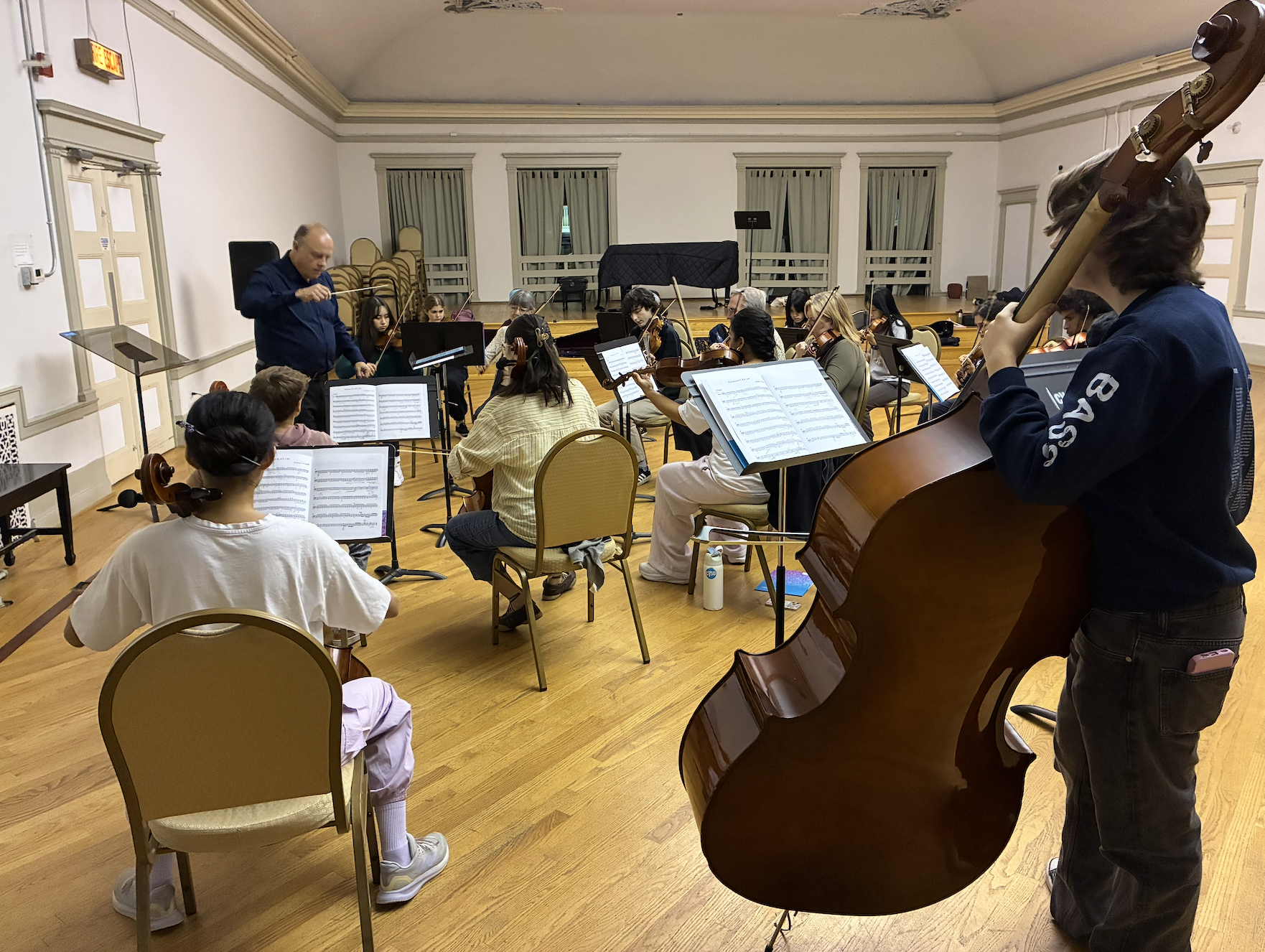
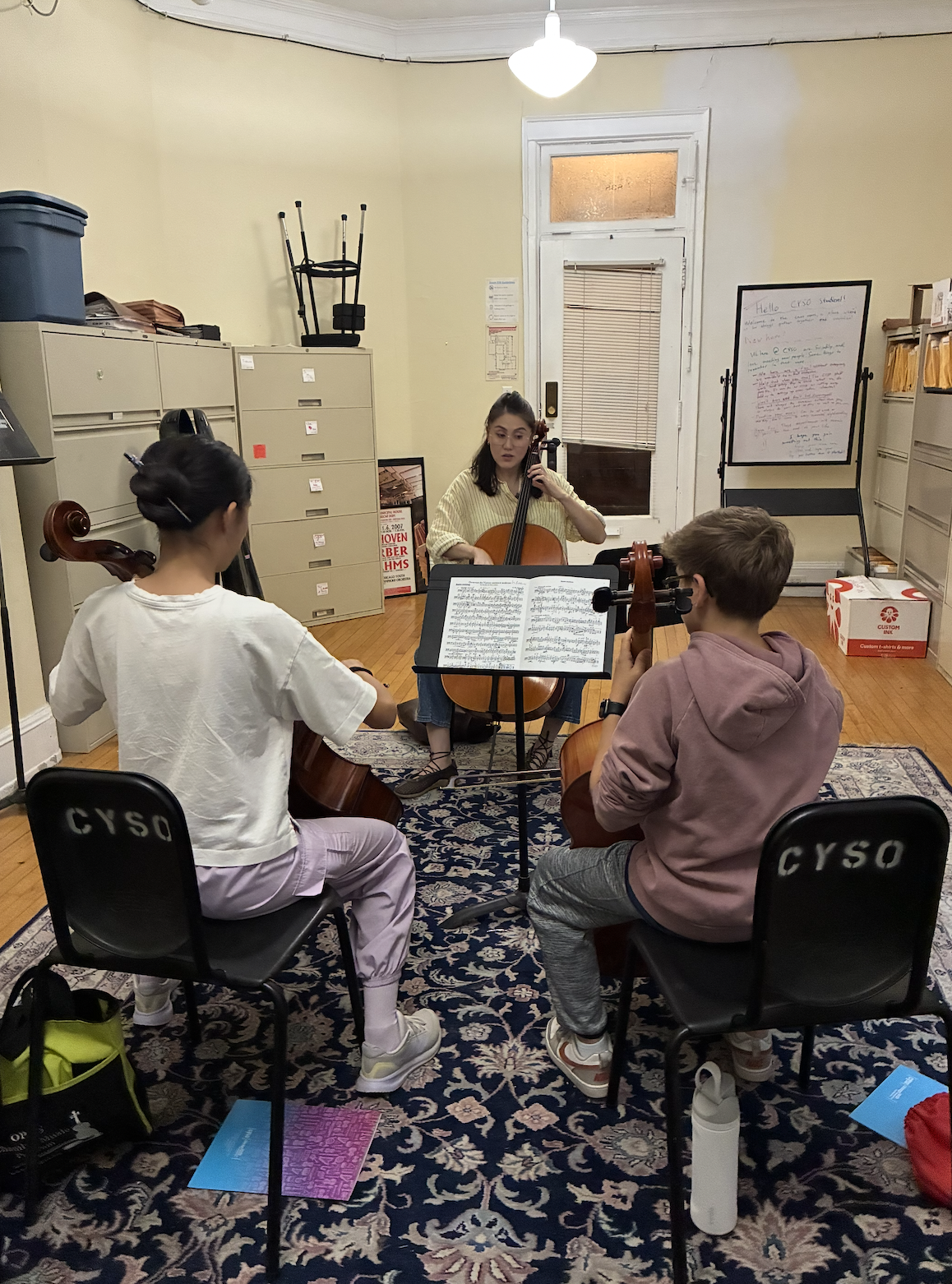
We at Chicago Youth Symphony Orchestras were pleased to be able to collaborate with Music of the Baroque this October, one of the leading ensembles in the country devoted to the performance of eighteenth-century works. This partnership offered our students the unique opportunity to explore the style of baroque playing in a small string orchestra with harpsichord. Rehearsal was led by Stephen Alltop, Northwestern University professor and baroque harpsichordist and specialist, with a final informal performance led by Nicholas Kraemer.
14 CYSO students participated – including members of Philharmonic Orchestra, Accelerando Strings, and Concert Orchestra across violin, viola, cello, and bass.



Who is Music of the Baroque?
Long recognized as one of the region’s top classical groups, Music of the Baroque’s professional chorus and orchestra has drawn particular praise throughout its history for its performances of the major choral and orchestral works of J. S. Bach and Handel, Mozart, and Haydn. The Chicago Sun-Times writes, “Lyric Opera of Chicago and the Chicago Symphony Orchestra may be the big guys on the local classical music scene, but in terms of sheer quality of performance…Music of the Baroque inhabits the same stratosphere.”


What is the Baroque Period?
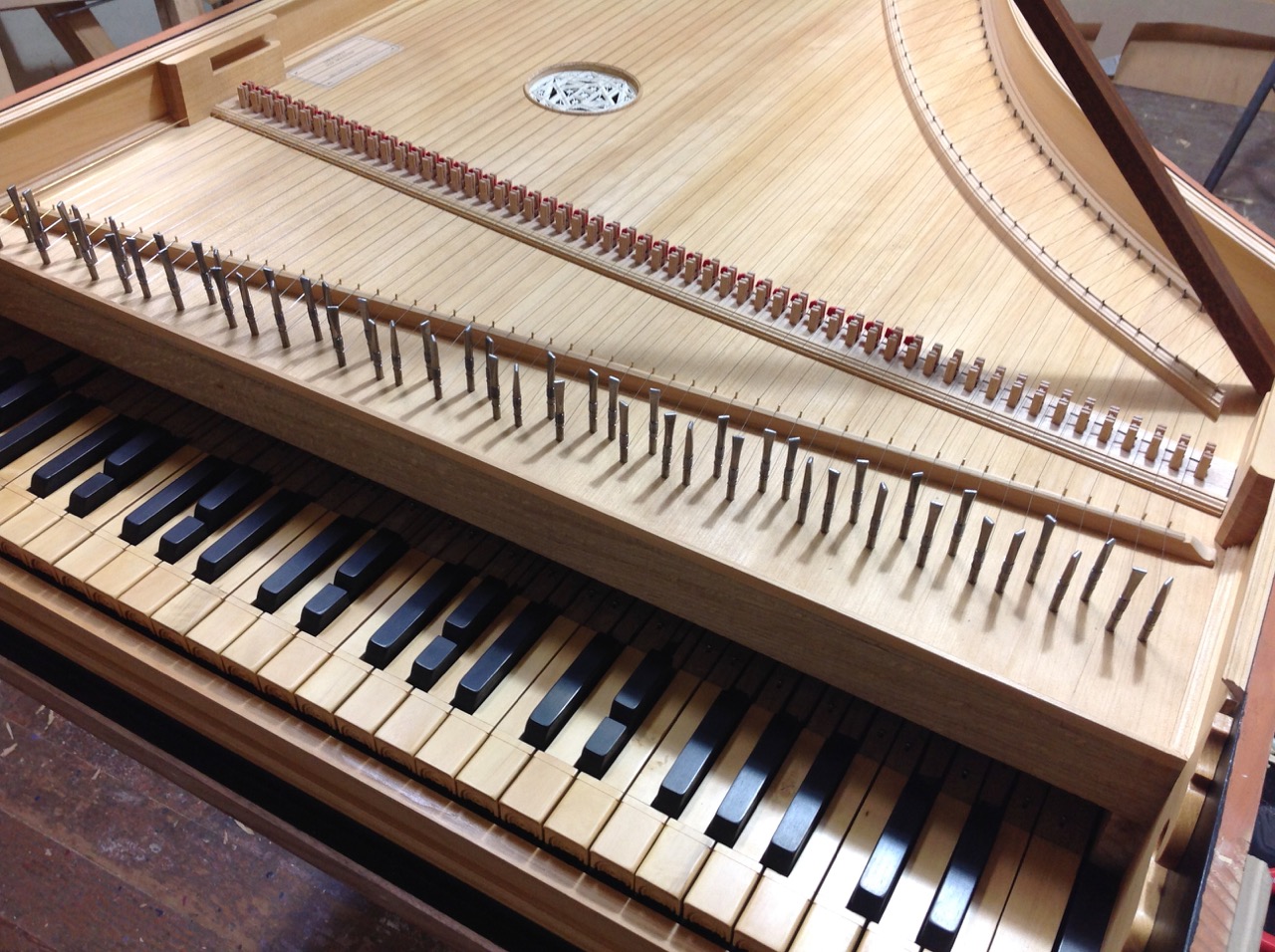
16th-century Italian-style harpsichord with split-accidentals and pull-down pedals by Owen Daly (Photo courtesy of Owen Daly)
Derived from the Portuguese barroco, or “oddly shaped pearl,” the term “baroque” has been widely used since the nineteenth century to describe the period in Western European art music from about 1600 to 1750. Comparing some of music history’s greatest masterpieces to a misshapen pearl might seem strange to us today, but to the nineteenth century critics who applied the term, the music of Bach and Handel’s era sounded overly ornamented and exaggerated. Having long since shed its derogatory connotations, “baroque” is now simply a convenient catch-all for one of the richest and most diverse periods in music history.
In addition to producing the earliest European music familiar to most of us, including Pachelbel’s Canon and Vivaldi’s The Four Seasons, the Baroque era also greatly expanded our horizons. The acceptance of Copernicus’s 16th century theory that the planets didn’t revolve around the earth made the universe a much larger place, while Galileo’s work helped us get better acquainted with the cosmos. Advances in technology, such as the invention of the telescope, made what was believed to be finite seem infinite. Great thinkers like Descartes, Hobbes, Spinoza, and Locke tackled the big questions of existence. Geniuses like Rubens, Rembrandt, and Shakespeare offered unique perspectives through their art. European nations grew more and more involved with foreign trade and colonization, bringing us into direct contact with parts of the globe that were previously unfamiliar. And the growth of a new middle class breathed life into an artistic culture long dependent on the whims of church and court.
Who were the major Baroque composers, and where were they from?
Many of the well known personalities from the first part of the Baroque period hail from Italy, including Monteverdi, Corelli and Vivaldi. (By the mid- eighteenth century, our focus shifts to the German composers Bach and Handel.) Many of the forms identified with Baroque music originated in Italy, including the cantata, concerto, sonata, oratorio, and opera. Although Italy played a vital role in the development of these genres, new concepts of what it meant to be a nation increased the imperative of a “national style.” Differences between nations are often audible in music from the period, not only in the way music was composed, but also in conventions of performance; particularly obvious was the contrast between Italy and France. While certain countries may seem to claim a larger piece of our experience of Baroque music today, however, every nation played a role. As musicians and composers traveled all over Europe and heard each other’s music, the new conventions they encountered made subtle impressions on them. Some of the best known composers from the period include the following:
Italy: Monteverdi, Frescobaldi, Corelli, Vivaldi, Domenico and Alessandro Scarlatti
France: Couperin, Lully, Charpentier and Rameau
Germany: Praetorius, Schein, Scheidt, Schutz, Telemann, Handel and Bach
England: Purcell
Nicholas Kraemer, Music of the Baroque Principal Guest Conductor

Copyright: Petra Hajská
Music of the Baroque’s principal guest conductor since 2002, Nicholas Kraemer began his career as a harpsichordist, quickly moving from playing continuo at the back of the orchestra to directing from the harpsichord at the front. His repertory widened in the 1970s, taking in the nineteenth and twentieth centuries as well as the Baroque. In 1978, he formed Raglan Baroque Players.
