

As we prepare for an exciting day of performances on May 10 at Pick-Staiger Concert Hall, we sat down with two of our conductors to get a behind-the-scenes look at what audiences can expect. Anne Huynh McTighe, Assistant Director of Strings, and Michael Mascari, Director of Concert Orchestra, share their insights into the music, the preparation, and the growth they’ve seen in their students this season.
Overture Strings
Why did you select these works and how are you preparing together?
Anne Huynh McTighe: With our youngest musicians in Overture Strings, we have an exciting opportunity to allow students to explore a diverse range of musical voices and styles from folk tunes to traditional dances, fiddle music, classical masterpieces, and more. This enables these musicians to experience a wide variety of musical forms, rhythms, and harmonies. The goal with each piece is to challenge performers to stretch themselves musically and personally, provide opportunities to learn new techniques, and build an understanding of ensemble playing.
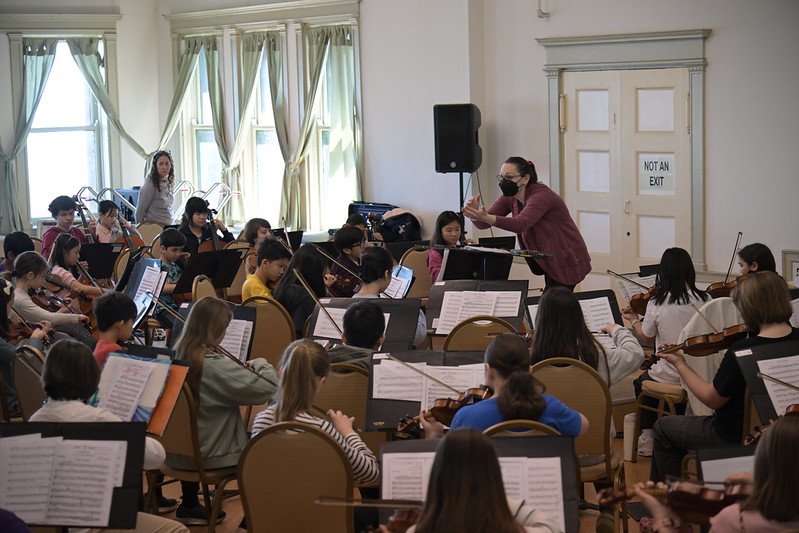
In preparing for each concert, our young musicians display incredible dedication and hard work, but we certainly have lots of fun learning together! Bottom of the Ninths, arranged by Bob Phillips, begins with “Take Me Out to the Ball Game”—a fun tune that is sure to be familiar to musicians and non-musicians alike! Listeners then take a musical journey through melodies from iconic ninth symphonies written by Schubert, Dvořák, and Beethoven. Overture Strings also explored an 18th century dance. Just So in the North is an arrangement by Chicago composer Dion Morales of a work by Ignatius Sancho, who is recognized as the first Black British composer. Shadow Fire is a contemporary composition by Randall Standridge. It features intense, driving eighth notes and rhythmic knocking on our instruments. The final piece on our program is a traditional Canton dance. Awakening Lions arranged by Albert Wang is from the Qing Dynasty and depicts the lion dance that is part of Chinese New Year celebrations. After sharing a snippet of our first rehearsal in honor of Lunar New Year, we are excited to perform the full work and showcase the results of all of our hard work and growth since January!
As this season comes to a close, what have your students achieved together?
Anne Huynh McTighe: As the season comes to a close, the thing I am most proud of is how the Overture Strings students have grown as an ensemble. While all of them came to CYSO with experience as solo performers, for most, Overture Strings was the first orchestra experience. Doing anything new requires bravery and determination, and the Overture Strings students certainly have no shortage of this. However, getting up on stage to perform as an ensemble in front of hundreds of audience members also takes teamwork—something that requires communication and trust.
The biggest achievement I have seen in the Overture Strings students this year is how they have become more thoughtful music listeners. They have developed an understanding of how to listen beyond their individual sound and adjust based on what they hear in the ensemble. They have learned how to balance melodies and harmonies. They have learned how to converse through musical phrases passed from one section to another. They have also learned how to trust each other. While this certainly makes them stronger musicians, it also helps them as they interact outside of the music world. I am so proud to say that the 33 individual musicians that entered Curtiss Hall in September will leave the stage on May 10th as an orchestra.
Concert Orchestra
Are there any ideas or themes in the music for this concert?
Michael Mascari: The program explores how women are portrayed in stories throughout history, in particular how their agency is stripped or manipulated in the service of male-dominated roles. We open with the delightful overture to Rossini’s Otello, a story in which Desdemona’s life (and its end) is entirely at the decisions and whims of the men around her. She possesses no agency, and in the end, her death is brought by the hand of her betrothed. She dies even though she does nothing wrong.
We are also playing The Sea and Sinbad’s Ship from Rimsky-Korsakov’s beloved Scheherazade, alongside American composer Liliana Primiani’s 1001, a critical reflection on Scheherazade. Primiani reimagines the story of Scheherazade through her eyes—exploring the terror and hopelessness of surviving psychological torture while marshaling the strength, courage, and wit to face the immense pressure of having to craft a story every single day that will be interesting enough, clever enough, funny enough, or strange enough to captivate her tormentor, the Sultan.
We close our concert with delightful music from Miyazaki’s film My Neighbor Totoro by Japanese composer Joe Hisaishi. The film follows the escapades of two sisters who move with their father to the countryside while their mother convalesces in a nearby hospital. The children explore their new home and the lands around it with abandon, playing, meeting forest spirits, getting lost. The music captures these two girls in their actions, decisions, and imaginations. It is free and joyful.
What is the Concert Orchestra working on musically with this program?
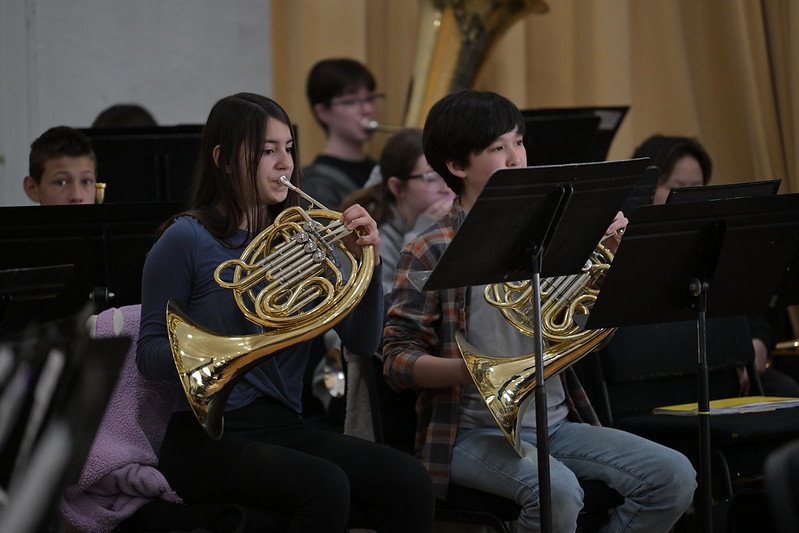
Michael Mascari: The central musical focus has been on the profound act of listening for understanding. As musicians within an ensemble, our students are learning to operate as vital components of a unified whole. This goes far beyond simply playing the right notes at the right time. We’ve dedicated significant rehearsal time to exploring the dynamic hierarchy within the music: identifying which instrumental lines are leading, which are providing harmonic support, and why.
But the true depth of this work lies in understanding how to play your part when it’s not the primary focus. It’s about recognizing that every voice contributes meaningfully to the overall tapestry, and adjusting your own playing to best serve the prevailing musical idea. This means developing a keen awareness of the other instrumental lines—their phrasing, their dynamics, their articulation—and tailoring your own performance to enhance their impact. Students are learning to adjust their dynamic levels with greater nuance, shape their phrases in response to others, and refine their articulation to create a truly cohesive and supportive sound.
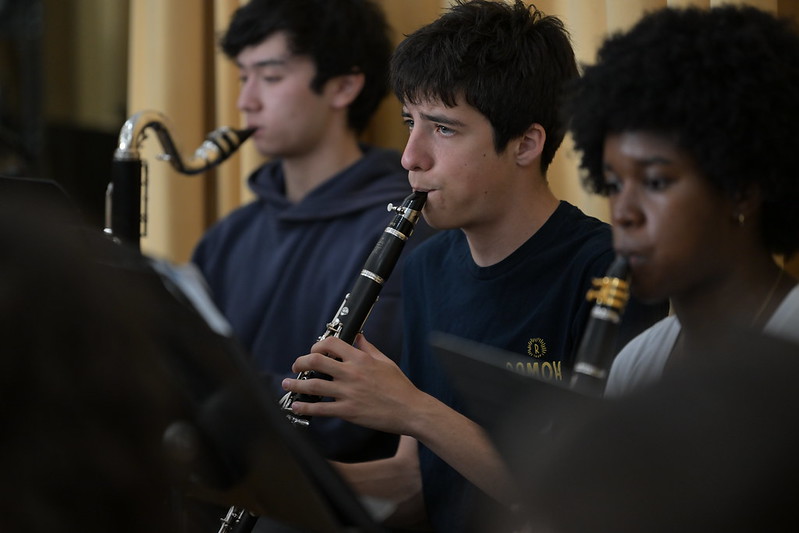
The ultimate aspiration, of course, is that this deep listening and collaborative spirit, honed through the challenges of this repertoire, will become an intrinsic part of their musicianship. It is my hope that these skills will be readily transferable to any piece of music the students encounter, in any orchestral setting, empowering them to contribute meaningfully not only at CYSO but in everything they do on and off the stage.
With five of our ensembles taking the stage this Saturday, May 10—Overture Strings, Preparatory Strings, and Debut Orchestra performing at 1:30 PM, and Concert Orchestra and Philharmonic Orchestra performing at 7 PM—this concert day promises to showcase the full range of talent and hard work from our young musicians. Whether you’re a returning concertgoer or attending for the first time, this is your chance to experience the passion, precision, and progress that define our orchestra community.
